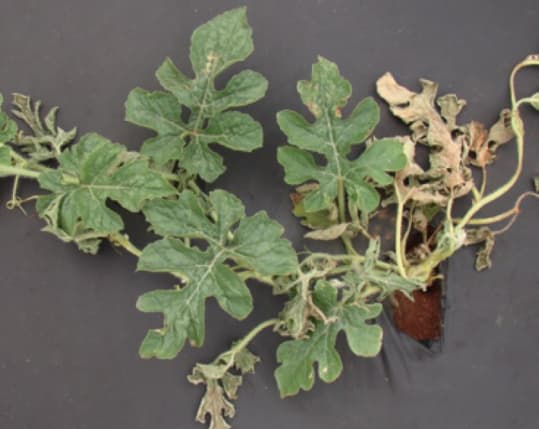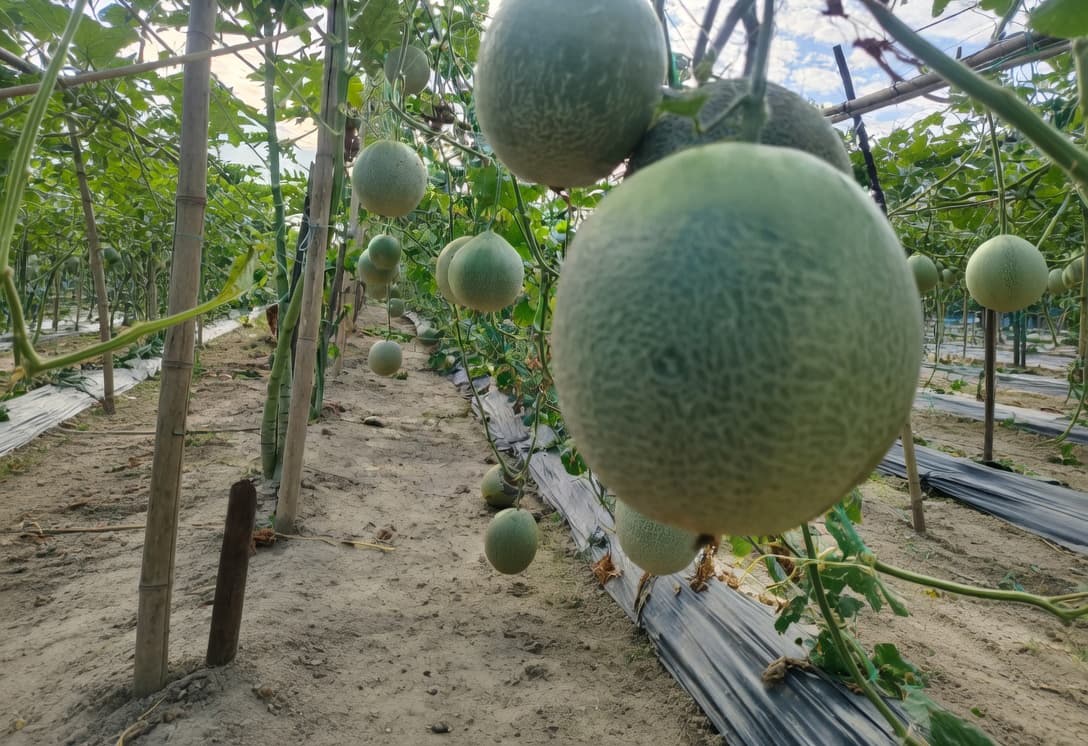
Vibrant wide-angle view of a thriving melon cultivation field in Bangladesh featuring rows of green-netted trellises laden with numerous ripening cantaloupe melons hanging from healthy vines, supported by bamboo poles and green netting, black plastic mulch covering the soil, under a bright blue sky with scattered clouds — ideal cover image for a comprehensive guide to growing melons.

Complete Guide to Melon Cultivation: A Detailed Step-by-Step Manual

Melon cultivation is an extremely profitable crop for farmers in Bangladesh. This delicious, nutritious, and high-demand fruit can yield high production when cultivated using the proper methods. This detailed guide explains every step of melon cultivation in simple language—from variety selection to harvesting and disease control. By following this method, you can produce high-quality melons year-round.

Melon Variety Selection

The first and most important step in successful melon cultivation is selecting the appropriate variety. Choose hybrid varieties that grow quickly in Bangladesh’s hot and humid climate, provide good flavor, and are disease-resistant. This will increase yield and make transportation to distant markets easier. Some popular varieties are as follows:

  • Riya Round: Attractive yellow outer skin, orange-colored sweet and crunchy flesh, sweetness 13-16%. Year-round, weight 1.5-2 kg, fruit ripens 77-80 days after sowing, ideal for long-distance transportation.
  • Arma Sweet: Cantaloupe type melon, fruit weight 1.5-2 kg, sweetness 13-14%. Year-round, marketable in 65-70 days.
  • Akson: Netted beautiful fruit, green flesh and extremely sweet. Weight 1.5-2 kg, year-round, ripens in 70-75 days, exceptional storage capacity.
  • Riya: Oval yellow fruit, weight 1.5-2.5 kg, disease-resistant and can be cultivated year-round in non-waterlogged land.

Land Preparation

If the land is not prepared properly, the melon plant’s roots become weak, and yield decreases. Sandy-loam soil is best for this crop. Then follow these steps:

  • Plow the land to a depth of at least 30-50 cm.
  • Leave the land in the sun for 7-10 days to naturally sterilize the soil (solarization).

Seedling Production

Producing seedlings and transplanting them yields more than direct sowing, as the plants grow faster and produce higher yields. Start by treating the seeds to prevent fungal attacks. Then follow this method:

  • Treat seeds with fungicide.
  • Sow 1-2 seeds directly per hole.
  • Prepare seedlings in trays and transplant to the field.
  • Transplant healthy seedlings to the main field 12-14 days after sowing.

Cultivation Method

  • Prepare beds and install irrigation pipes on them.
  • Lay plastic mulch and secure it with small bamboo or soil— this will reduce weeds and retain soil moisture.
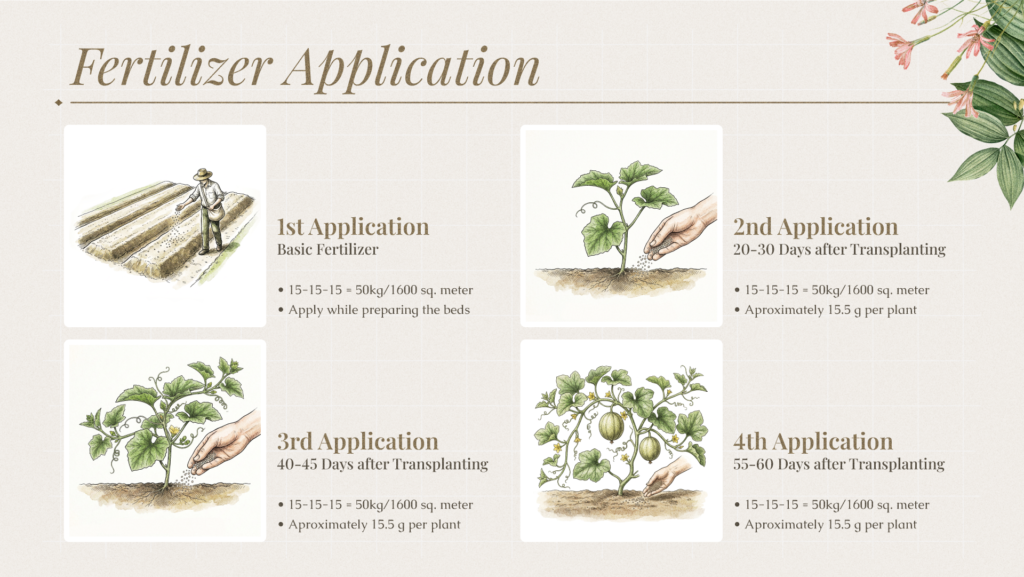
Infographic timeline in Bengali showing four stages of fertilizer application for melons: farmer applying base fertilizer on fields, then top dressings on seedlings at specified intervals with NPK ratios and quantities.
Step-by-step guide to fertilizer application in melon cultivation: Basic at preparation, followed by three top dressings at 20-30, 40-45, and 55-60 days post-transplanting.
Photo source - plantpath.ifas.ufl.edu
Fertilizer Application

Proper timing and amount of fertilizer are crucial for the proper growth of melon plants and sweet fruits. Excessive fertilizer damages the soil, while too little reduces yield. The prescribed fertilizer application schedule for 1600 square meters of land is given below:

  • First application: Basic fertilizer 15-15-15 = 50 kg, spread evenly during bed preparation.
  • Second top dressing: 20-30 days after transplanting, 15-15-15 = 50 kg (15.5 grams per plant).
  • Third top dressing: 40-45 days after transplanting, 15-15-15 = 50 kg (15.5 grams per plant).
  • Fourth top dressing: 55-60 days after transplanting, 13-13-21 = 50 kg (15.5 grams per plant).
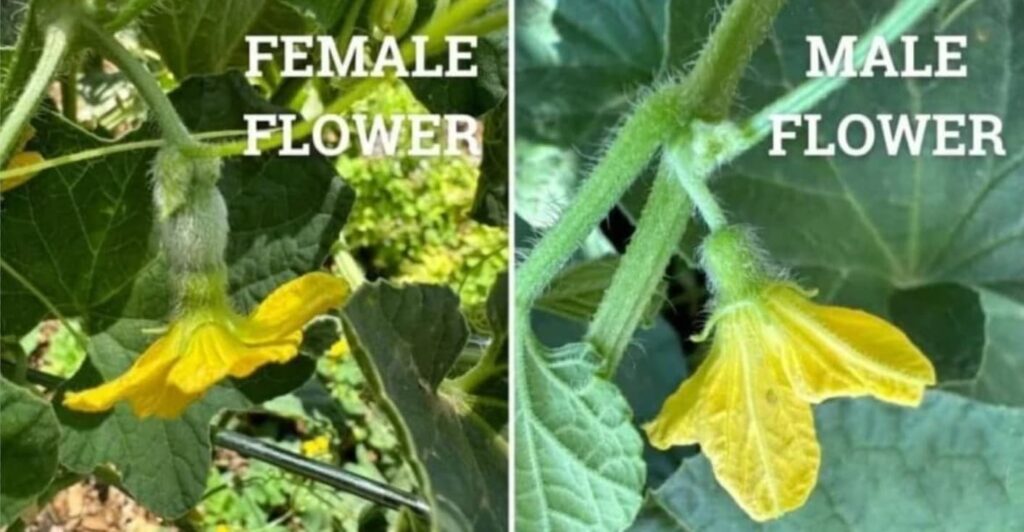
Side-by-side image of melon flowers: left is female with yellow petals and basal ovary; right is male with yellow petals and thin stem, both on green leafy vines.
Comparison of female (left, with ovary) and male (right, without ovary) melon flowers for pollination identification.

Pollination

Since male and female flowers are separate on melon plants, fruits won’t form without pollination. Bees usually do this, but in greenhouses or bad weather, artificial pollination is necessary. Do this in the morning when flowers bloom. The method is simple:

  • Pick a male flower that bloomed in the morning on the selected branch and touch its pollen to the stigma of the female flower.
  • Ensure the presence of bees in open fields.
  • In greenhouse cultivation, pollination must be done by hand.

Water Management and Irrigation

Without proper water management, melon yield won’t be good, and roots may rot. Water requirements change from seedling stage to fruit ripening. Control irrigation in four stages:

  • Provide sufficient irrigation in the young stage but do not keep it too wet, as there is a risk of root rot.
  • Reduce water slightly during pollination.
  • Gradually increase water during fruit setting and growth.
  • Reduce water from fruit development to ripening and stop irrigation completely 3-5 days before harvesting. This improves fruit quality.
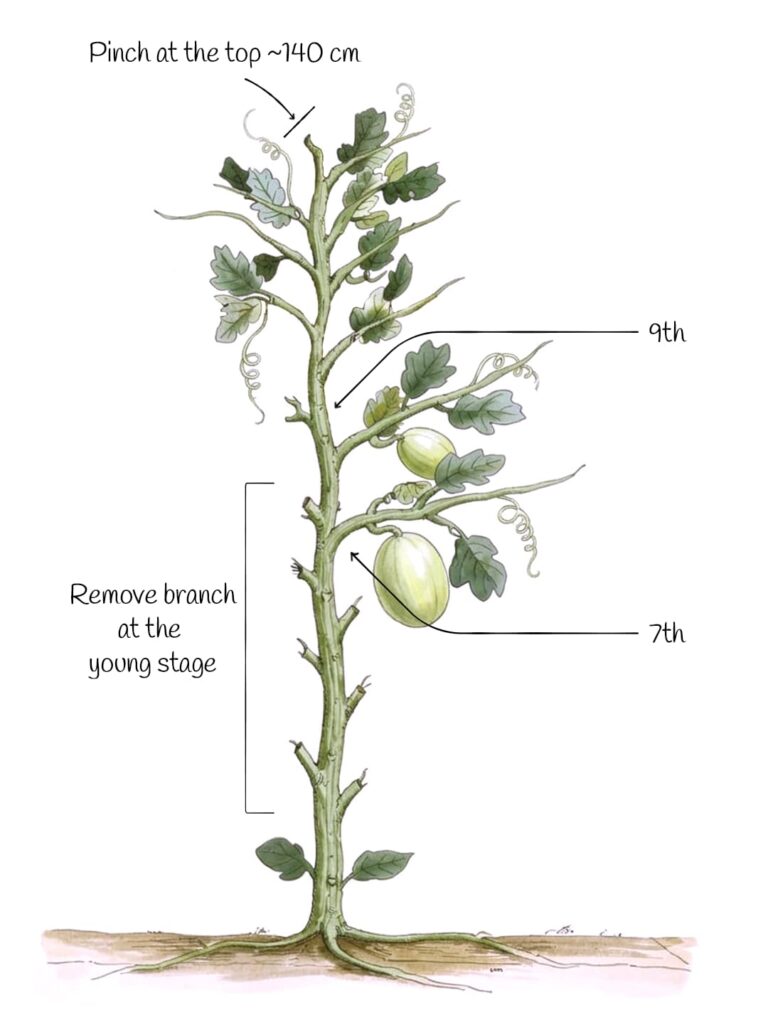
A hand-drawn diagram of a melon vine growing vertically, with annotations for pruning: top pinched at ~140 cm, side branches removed in early stages, and fruits labeled at the 7th and 9th nodes along the main stem with leaves and tendrils.
Illustration of melon plant pruning: Pinch the top at approximately 140 cm, remove young side branches, and select fruits at the 7th to 9th nodes for best results.
Photo source - plantpath.ifas.ufl.edu
Plant Care and Training

To keep the plants straight and strong, trellising and branch pruning are essential. Following the single-stem method results in larger fruits. The main tasks are:

  • Build a trellis and raise the plants high.
  • Cut all side branches below the 6th node.
  • Pinch the tip at about 140 cm height.
  • For fruit setting, the 7th-9th node is suitable for Honeydew/Canary varieties and 9th-12th for Net Melon.
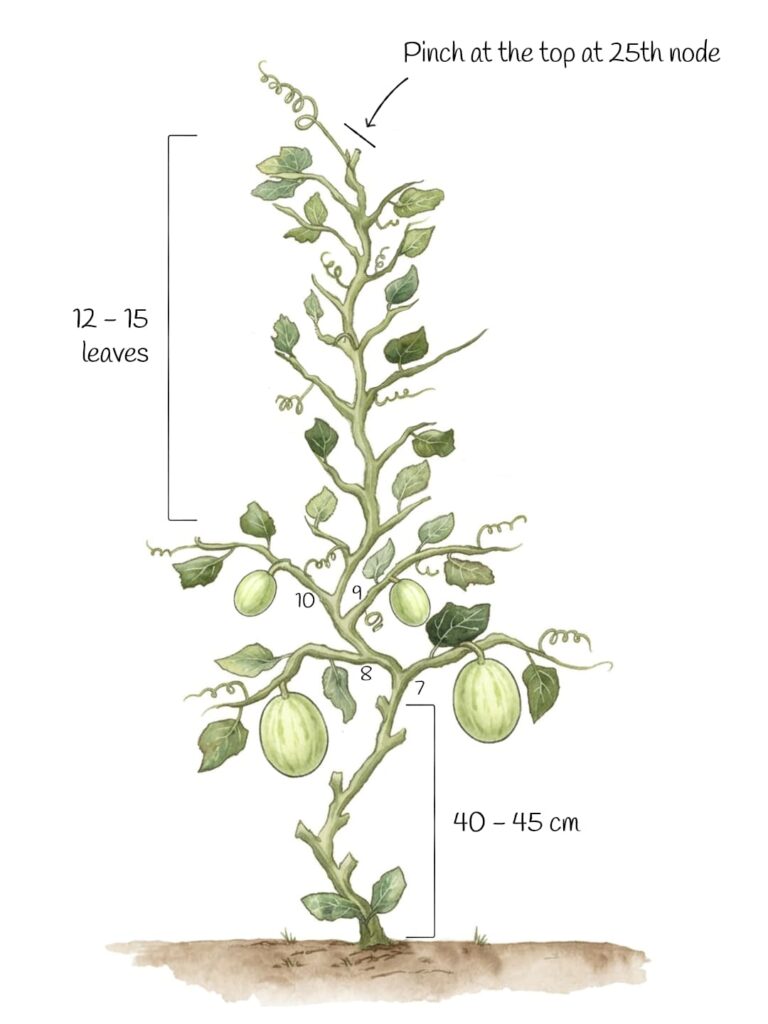
Illustrated melon vine with main stem, leaves, tendrils, and fruits at nodes 7 through 10; labels for pinching at the 25th node, maintaining 12-15 leaves, and a 40-45 cm fruit zone from the base.
Diagram of melon plant structure: Select fruits at nodes 7-10, keep 12-15 leaves above, and pinch the top at the 25th node for optimal development.
Photo source - plantpath.ifas.ufl.edu
Fruit Selection and Hanging

If multiple fruits are kept per plant, the fruits become small. So, select good branches and keep only one fruit per plant. Select the appropriate fruit when it reaches the size of a chicken egg (7-10 days old). This will make the remaining fruits larger and sweeter.
  • For Honeydew and Canary types, keep fruit at the 7th-9th node, for Net Melon at the 9th-12th node.
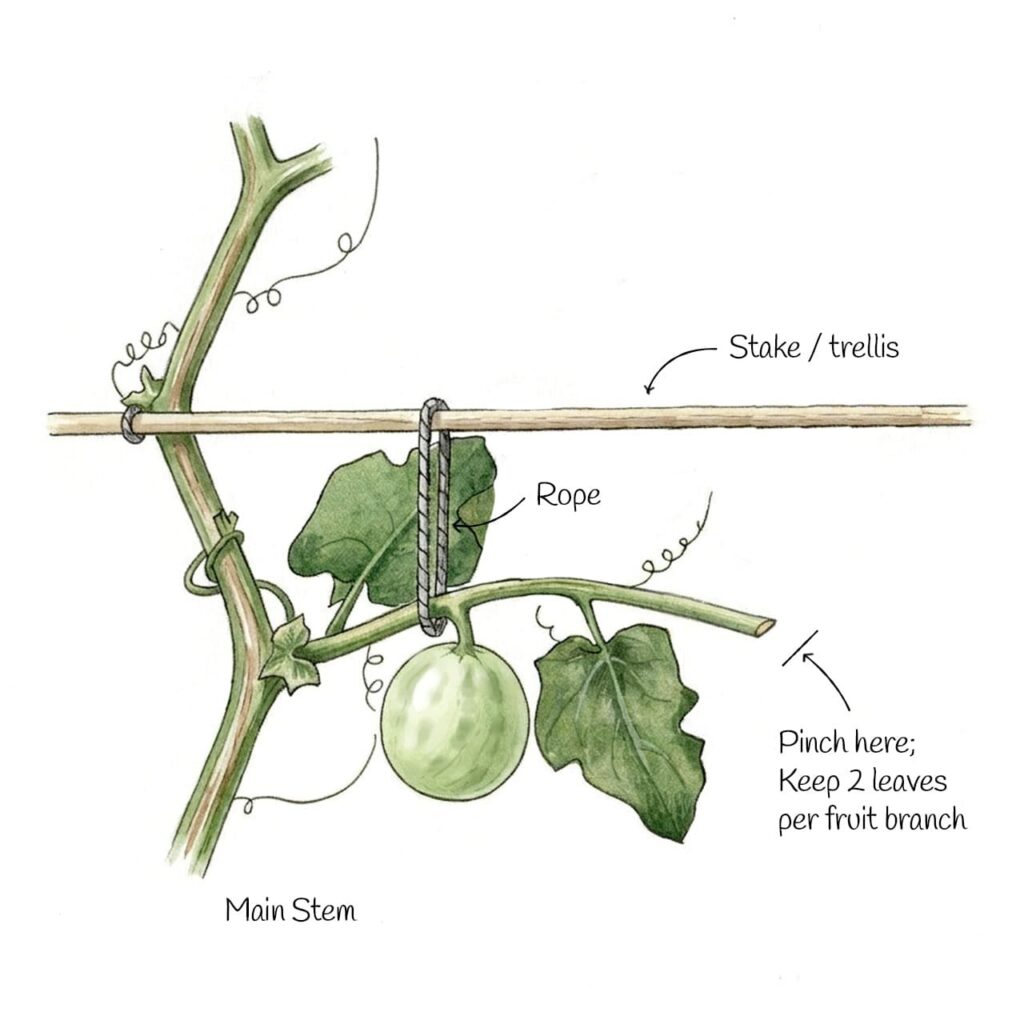
  • Keep 2 leaves on the selected branch.
  • Keep 12-15 leaves above the selected fruit node.
  • Cut the main stem at the 25th node.
Hand-drawn illustration of a melon vine on a trellis, with the main stem secured by rope to a horizontal stake, a side branch bearing a green melon fruit and leaves, labeled to pinch the branch tip and keep 2 leaves per fruit branch.
Diagram illustrating melon plant support: Use rope to tie the main stem to a stake or trellis, and pinch the fruit branch tip while keeping 2 leaves for healthy growth.
Photo source - plantpath.ifas.ufl.edu
Harvesting

If the crop is not harvested at the right time, the fruit's flavor and quality deteriorate. Consider the variety, market, and transportation when harvesting. Harvest when the fruit is 80-90% ripe. Easy ways to identify:

  • Cracks appear in the abscission layer of the peduncle.
  • The skin color changes and fragrance spreads.
  • Confirm by counting the fruit's age.

Disease and Pest Control

The biggest challenge in melon cultivation is disease and pest attacks. Preventive measures can significantly reduce damage. Common problems and solutions are given below:

Photo of melon plants on black plastic mulch displaying bacterial wilt symptoms: wilted, yellowed leaves and drooping vines with small green melons visible.
Bacterial Wilt
Photo source - plantpath.ifas.ufl.edu
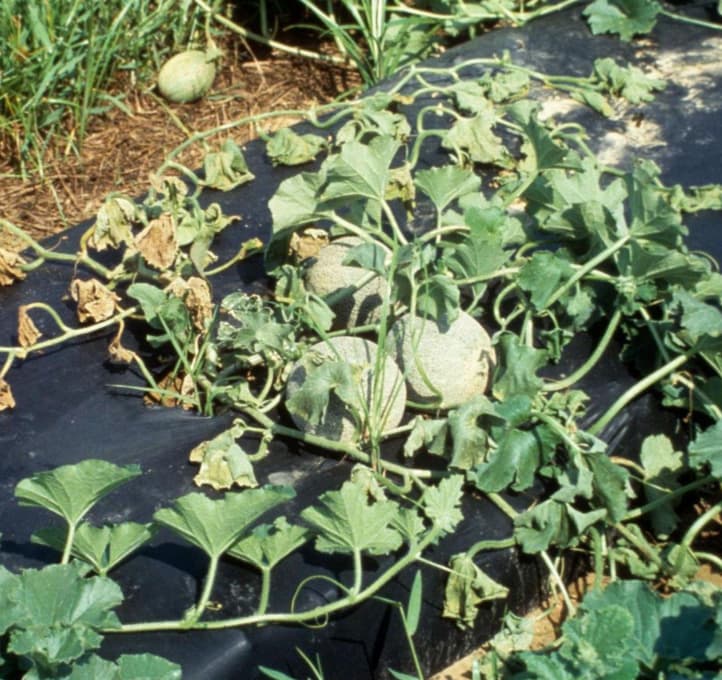
Bacterial Wilt:

  • Pathogen: Erwinia tracheiphila
  • Symptoms: Plant wilts.
  • Control: Remove weeds and wild cucurbit plants (e.g., wild gourd/zucchini), control beetles, remove infected plants.
Photograph of a green melon leaf with multiple irregular brown spots and yellow halos due to Gummy Stem Blight disease, with surrounding healthy leaves and a small yellow flower in the background.
Gummy Stem Blight
Photo source - plantpath.ifas.ufl.edu
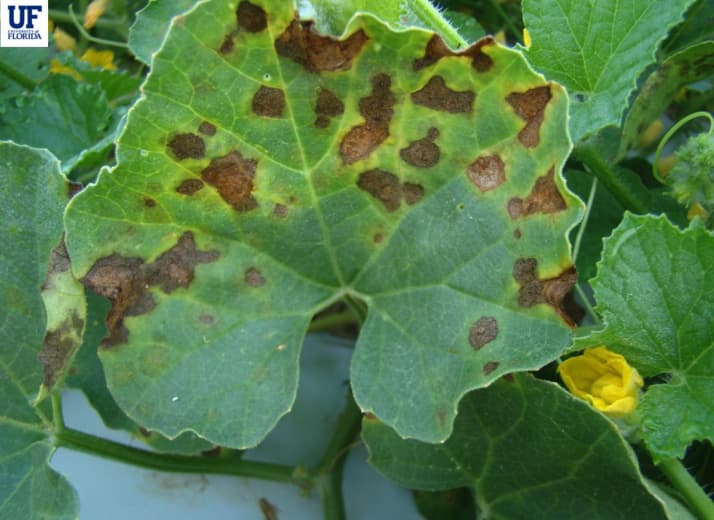
Gummy Stem Blight:

  • Pathogen: Didymella bryoniae
  • Symptoms: Circular or irregular brown spots with indistinct central rings on seedlings, cotyledons, and leaves. Bud and stem lesions turn brown.
  • Control: Avoid planting where previous cucurbit crop residues remain. Use disease-free seedlings, spray Prochloraz fungicide.
Green melon leaf held by a hand, displaying scattered pale yellow spots and slight moisture indicative of Downy Mildew disease.
Downy Mildew
Photo source - plantpath.ifas.ufl.edu
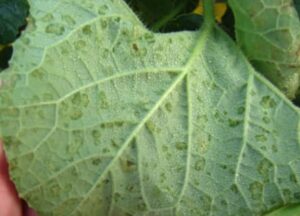
Downy Mildew:

  • Pathogen: Pseudoperonospora cubensis
  • Symptoms:
    • Initially angular spots, yellowish lesions. Older lesions turn brown and die (necrotic).
    • Severely affected leaves become pale yellow, brown, and dry.
    • In humid weather, gray fungal spore mass may appear on the underside of these spots.
    • Spores spread by air.
  • Control: Use resistant varieties and spray mancozeb.
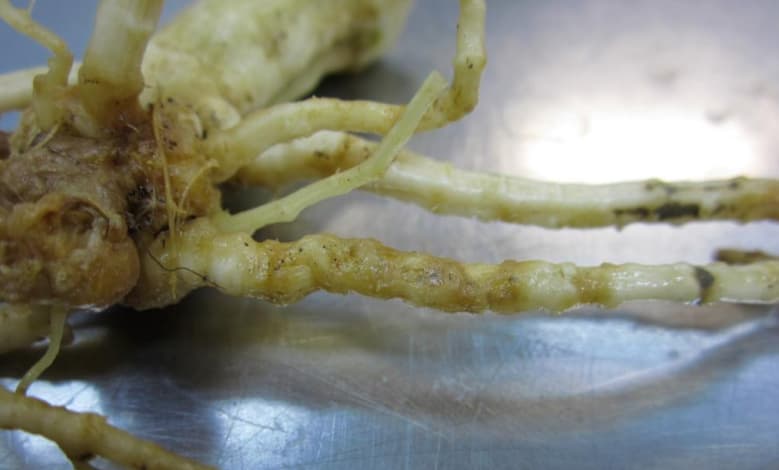
Close-up of melon plant roots affected by sudden wilt disease, displaying yellowish-brown discoloration, necrotic lesions, bumpy or galled appearance, and rot on the root segments and junctions against a metal surface.
Sudden wilt
Photo source - inaturalist.org

Sudden Wilt:

  • Pathogen: Monosporascus cannonballus
  • Symptoms: Root-rotting fungus forms, destroys nutrient-absorbing roots and attacks main roots, hindering water absorption.
  • Control: Sterilize soil with methyl bromide.
Close-up of melon plant leaves severely affected by Fusarium wilt disease, showing dull green to yellow chlorosis, wilting, browning, dry and brittle texture, and necrotic patches on older foliage, with vines and tendrils partially collapsed against a dark background and black plastic mulch.
Fusarium Wilt
Photo source - plantpath.ifas.ufl.edu
Fusarium Wilt:

  • Pathogen: Fusarium oxysporum f. sp. melonis (muskmelon)
  • Symptoms:
    • Affected plant gradually wilts.
    • Plant gradually weakens and dies.
    • Vascular tissue discoloration.
    • Major problem in muskmelon, fungus enters plant through roots.
  • Control: Quickly remove infected plants and follow crop rotation (wait as long as possible between crops).
Close-up of a human hand holding a single green melon leaf (likely cantaloupe or watermelon) covered densely with numerous tiny white specks resembling small insects or eggs on the upper surface, against a dark mulch background and sandy soil; symptoms indicate heavy whitefly infestation, which transmits damaging virus diseases in melon plants.
Whiteflies Virus
Photo source - plantpath.ifas.ufl.edu
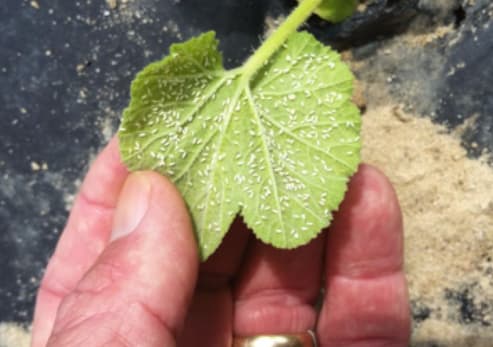
Virus Diseases:

  • Insects: Thrips (hot-dry weather), Whitefly (humid-warm weather)
  • Symptoms:
    • Various degrees of mottling, distortion, and stunting on leaves.
    • Fruits may occasionally show mottling and distortion.
  • Control: Control thrips and whiteflies, keep surrounding weeds clean.

Use pesticides and regular monitoring to keep your melon field healthy.

By following this complete method of melon cultivation, you will achieve excellent yield and profit. Proper variety, land preparation, fertilizer, and water management—all combined, this guide will bring you success. If you have any questions or want more details, please comment. Best wishes for successful cultivation!

error: Content is protected !!