Modern and Profitable Watermelon Cultivation: A Complete Guideline
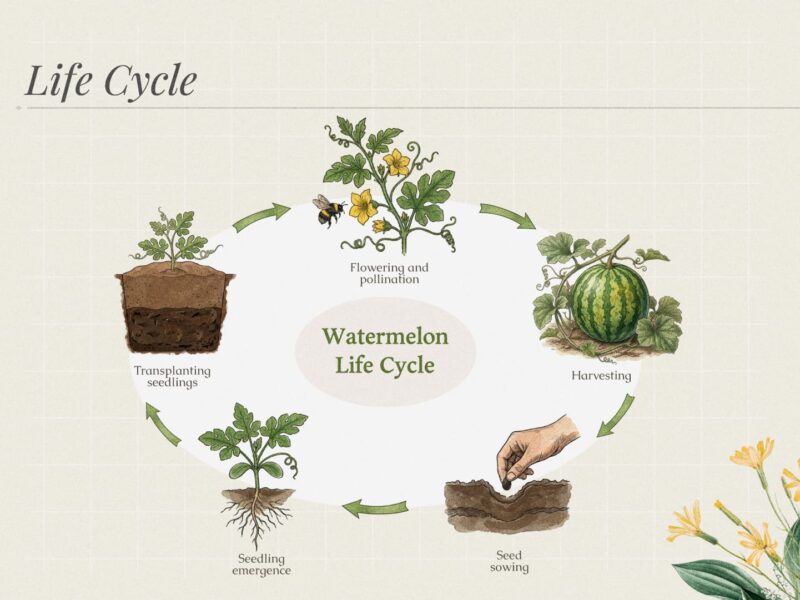
Watermelon (Citrullus lanatus) is one of the most beloved fruits of the summer season. Not only is it delicious and juicy, but its high water content also helps keep the body cool and maintains hydration. Packed with nutritional value, this fruit contains Vitamins A, C, and essential antioxidants. By following proper cultivation methods, it is possible to achieve high yields and significant profits from watermelon farming.
1. Variety Selection
The first step to successful farming is selecting the right variety. Some of the popular hybrid varieties from Jamalpur Seeds include:
Hybrid Bengal Tiger Plus: A perennial variety weighing 3–6 kg. It is suitable for long-term storage and long-distance transport. It is resistant to adverse weather, waterlogging, and diseases (Crimson type).
Hybrid Sweet Black-2: Perennial, elongated fruit, black skin, and extremely sweet. This variety is ideal for long-distance transport and is disease-resistant (Sugar Baby type).
Hybrid Asian-2: Seasonal variety with green skin and dark green stripes (Banglalink type). It is transportable, large in size, and weighs between 8–10 kg.
Hybrid Kanya: Perennial, Banglalink type with bright yellow flesh. It is very sweet and disease-resistant.
Hybrid Kornojhoora: Seasonal, Glory type. Suitable for long-term storage and transport. Large fruits weighing 8–10 kg.
2. Soil and Land Preparation
Soil Type: Well-drained sandy loam soil with a slightly acidic pH is most suitable for watermelon cultivation. High-quality watermelons can grow well in sandy soil if adequate fertilizer and water are ensured.
Preparation: Plowing the land and applying fertilizer well before planting increases the moisture & nutrient in the seedbed. The land should be plowed deeply using a plow or harrow so that roots can spread deep into the soil.
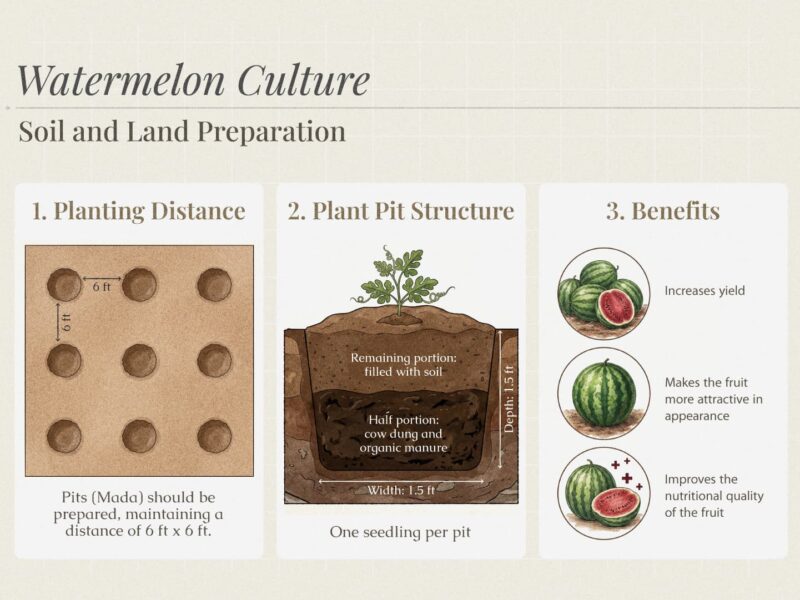
Higher profit through advanced cultivation! Take a quick look at the ideal pit (mada) preparation and planting method for watermelon cultivation. By following the correct distance and rules for pit preparation, your watermelons will be more nutritious and attractive.
3. Pit Preparation and Planting Distance
Distance: Pits (Mada) should be prepared, maintaining a distance of 6 ft x 6 ft.
Pit Measurement: Each pit should be 1.5 ft wide and 1.5 ft deep.
Filling Method: Fill half of the pit with compost or cow dung and the remaining half with soil. Only one seedling should be kept per pit to increase yield, improve fruit appearance, and boost nutritional value.
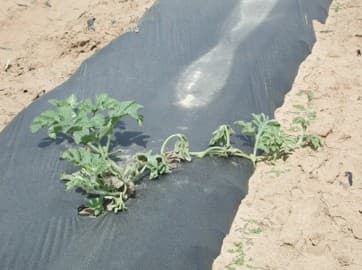
Bed Preparation: Cover the beds with plastic mulch, securing it with bamboo or soil. Install irrigation pipes on top of the beds.
4. Fertilizer Application Schedule
For optimum yield, the following fertilizers can be applied per acre:
Cow dung/Organic Fertilizer: Plentiful amount.
Urea: 80 kg.
TSP: 50 kg.
MP (Potash): 40 kg.
Gypsum: 40 kg.
Zinc Sulphate & Borax: 4 kg each.
Note:
Top-dress with 200g of Urea and 100g of Potash per decimal 20–25 days after sowing (1st dose) and 40–45 days after sowing (2nd dose). Follow the local Department of Agricultural guidelines for fertilizer use.
5. Irrigation and Water Management
Critical Stages: The most important stages for irrigation are: before seedlings emerge, during first flowering, and during fruit setting.
Cautions: Avoid irrigation in the afternoon or at night to reduce the spread of weeds and diseases. Do not use sprinkler irrigation in the morning during flowering and fruit setting, as it interferes with pollination.
Ripening Stage: Reduce irrigation when the fruit is ripening; otherwise, the sweetness may decrease, and the fruit might crack.
6. Plant Care and Training
Spread straw on the ground before the watermelon vines start growing.
During the monsoon season, cultivating watermelons on a trellis (Mancha) yields a better harvest.
Pruning: Keep only the main stem and three vigorous side branches. Remove all other branches and the first small fruit (“Jali”) to ensure the later fruits grow larger and of better quality.
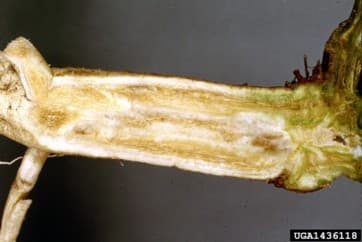
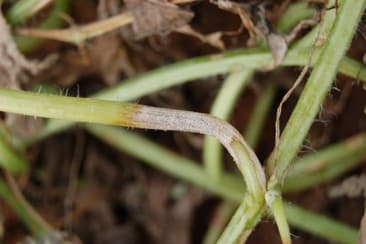
Initial symptoms include leaves turning a dull gray-green color and wilting during the heat of the day. Older leaves tend to wilt first, and the wilt can be unilateral, affecting only one or two vines on a plant. Vines that wilt during the day initially recover at night, but eventually the wilt becomes permanent, leading to plant death. Brown streaking can be seen in the vascular tissue of the lower stem and spreading into the vines (Figure-left). The fruit that forms on infected plants is often small and misshapen, and they tend to crack or sunburn with age.
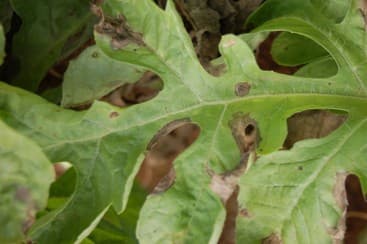
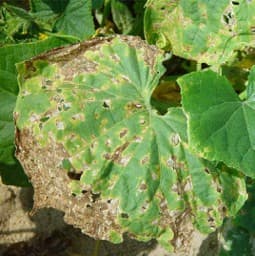
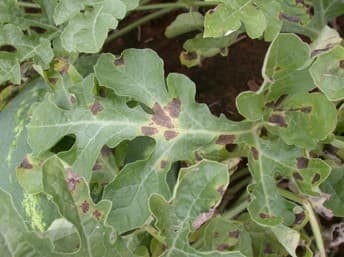
On watermelon, the disease is mainly confined to the foliage (leaves and petioles), although seedling blight and fruit rot occasionally occur. Leaf spots are circular to irregular in shape, large (up to 3/4 inch in diameter), and dark brown to black in color (Figure-left). The spots often develop at the leaf margins, which is unusual for most foliar diseases. Heavily spotted leaves are killed, and affected foliage does not remain erect like downy mildew. Fruiting bodies of the fungus may be visible on affected petioles as tiny black specks (Figure-right).
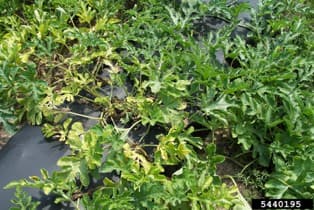
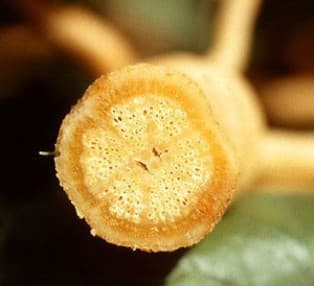
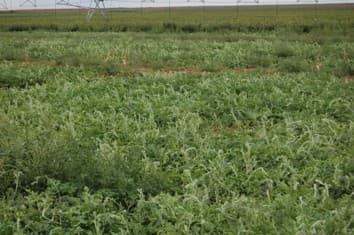
Affected plants are often most numerous near the edges of fields and appear in patches. Plants turn yellow and die back (Figure-left). Numerous squash bugs may be present, or there will be evidence of their prior feeding. When basal stems of affected plants are cross-sectioned, a ring of light brown discoloration is evident around the outer part (phloem) of the vascular core (Figure-right). The phloem—a part of the vascular system of the plant that transports sugars and nutrients downward from the leaves—becomes dysfunctional, resulting in the yellowed foliage.
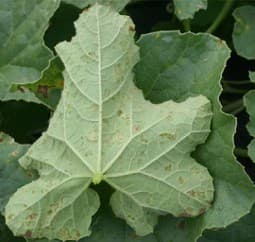
Foliar symptoms begin as small, water-soaked spots (lesions) that later enlarge (Figure-left). As enlarging spots encounter leaf veins, they become angular in shape (Figure-right). A yellow halo may develop on some hosts. Under warm and humid conditions, bacterial cells ooze from lesions, forming a white exudate on the undersurface of leaves. Stems and fruit may develop water-soaked spots and necrosis.
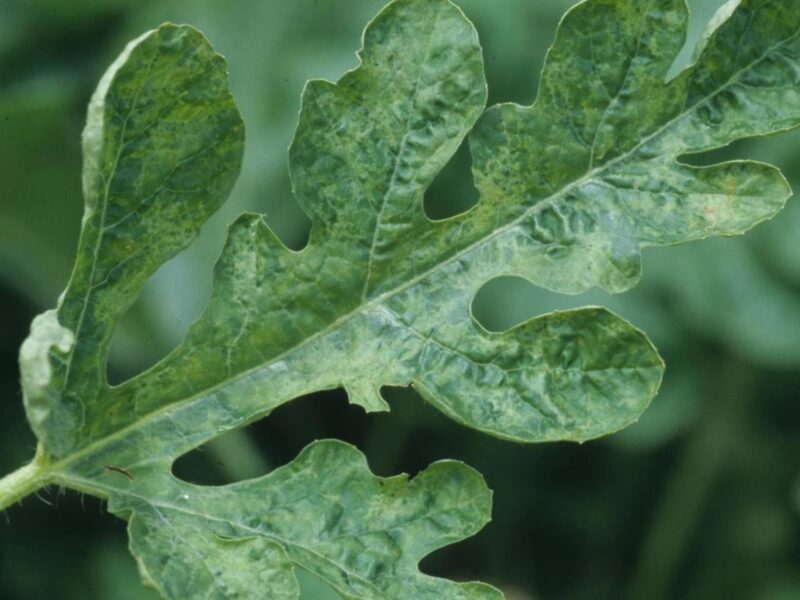
Plants can be infected at any stage of growth. Symptoms are most striking on the new growth of young, rapidly growing plants. Leaves are dwarfed, misshapen, puckered, pale green in color, and exhibit mosaic patterns of light and dark green color (Figure-left). Infected plants remain stunted throughout the season and may fail to set fruit, or it will be small in size and poor in quality (Figure-middle). Virus infection of older plants usually results in less dramatic symptom development and damage. Sometimes the vine terminals of infected plants become erect and hover over the canopy (Figure-right).
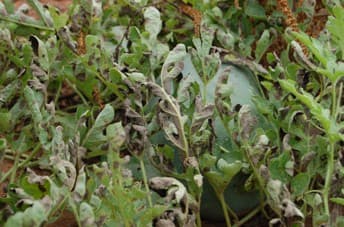
Symptoms of downy mildew are confined to leaves. The oldest leaves are usually attacked first. Symptoms first appear as pale green to yellow blotches on leaves that develop into spots that are circular to irregular in shape and dark brown to black in color (Figure-left). Affected leaves curl inward, quickly die, and remain attached to upright petioles (Figure-right). Severely infected foliage appears scorched. Petioles and stems remain intact for some time following defoliation. This is in contrast to anthracnose, which affects and kills stems and petioles as well as leaves.
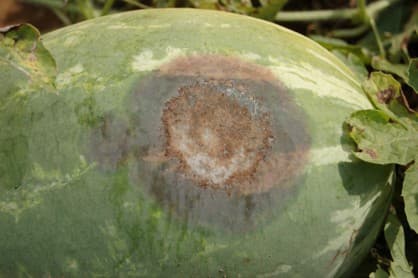
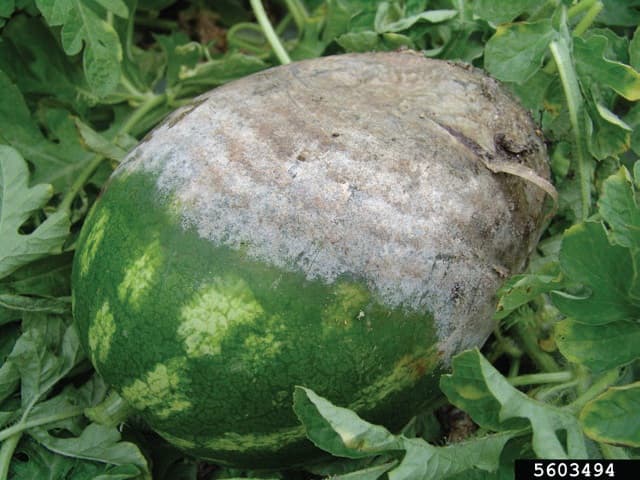
Usually, symptoms first appear in low-lying areas of a field where standing water commonly occurs. fruit rot is the primary symptom (Figure-left). Fruit rots are circular in shape and usually covered with a white, powdery layer of mold. Fruit rots can be especially common when fruit is in direct contact with the soil surface. It is important to note that several days or weeks may be needed before infected fruit show rot symptoms. Therefore, harvested fruit that were symptomless at the time of harvest may develop rot later, causing substantial losses in transit to market. Under severe disease pressure, foliar symptoms may also consist of circular to irregular brown spots with pale green margins.
Situate plantings far from areas with disease symptoms,
Use raised beds so that water is drained off the field,
Use drip irrigation system,
Apply metalaxyl,
Follow the rules & regulations of the local agriculture department regarding the chemical pesticide usage.
8. Harvesting
Harvesting at the right time is crucial for quality. Signs of a ripe watermelon include:
The skin or rind becomes glossy.
The spot where the fruit touches the ground turns from white to light yellow.
The tendril near the fruit stem turns brown and dries up.
A dull thud sound when thumping the fruit.
Note:
Watermelons should be cut from the vine rather than pulled, twisted, or broken off. Also, a long stem on the fruit should be left to prevent damage & decay. Handle with care to avoid bruises.
In conclusion, following modern cultivation practices is essential for achieving desired yields and maximum profits in watermelon farming. Every step, from selecting the right variety to advanced fertilization, irrigation, and disease management, has been detailed in this guide. By choosing Jamalpur Seeds’ high-yielding hybrids and adopting proper care, farmers in Bangladesh can produce high-quality, delicious watermelons year-round. We hope this modern agricultural guide makes your farming journey easier and more profitable.